Master Key Systems in Marietta, GA
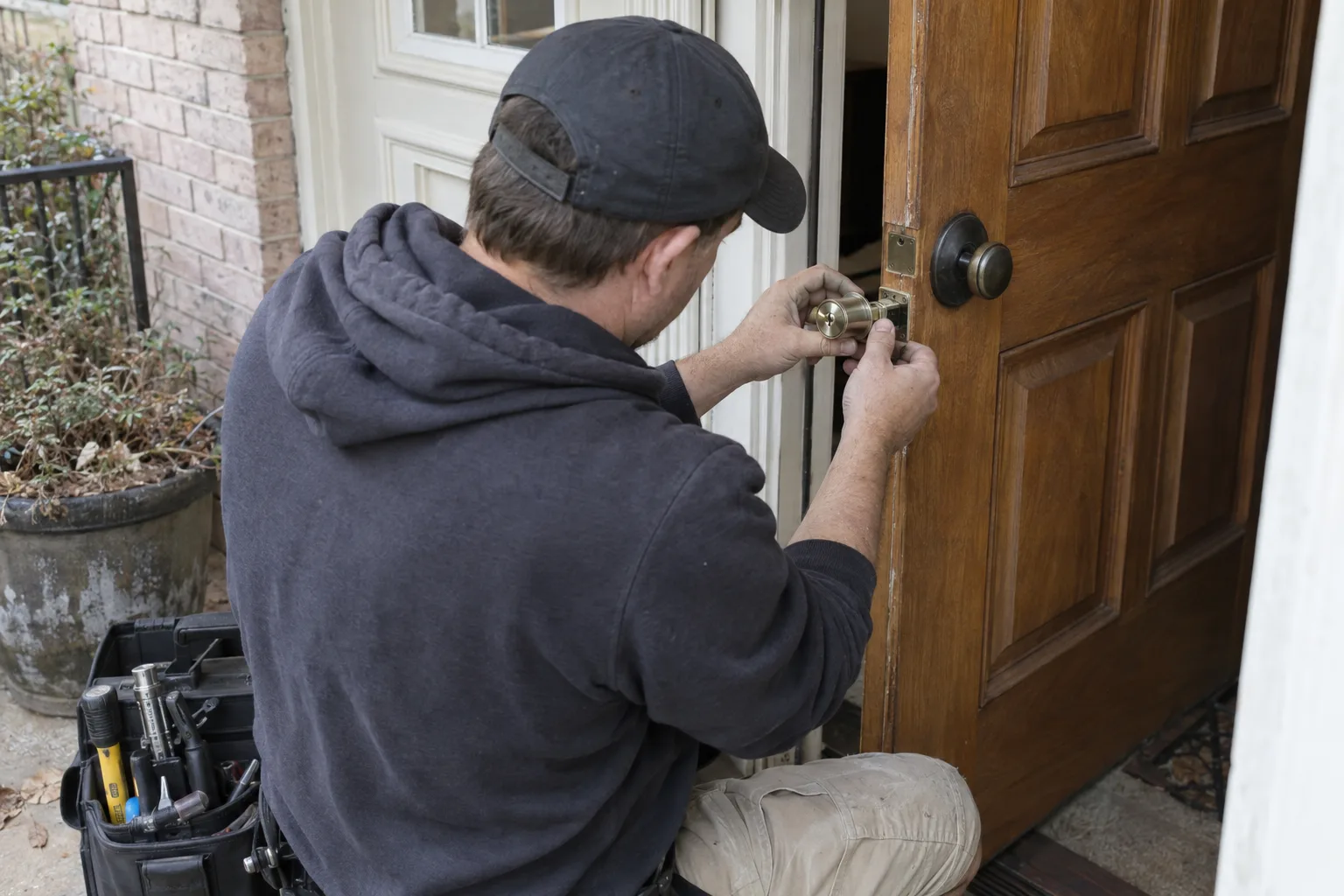
How a Master Key System Works, Tier by Tier
Every key in the system sits on a tier, and each tier opens a set group of doors.
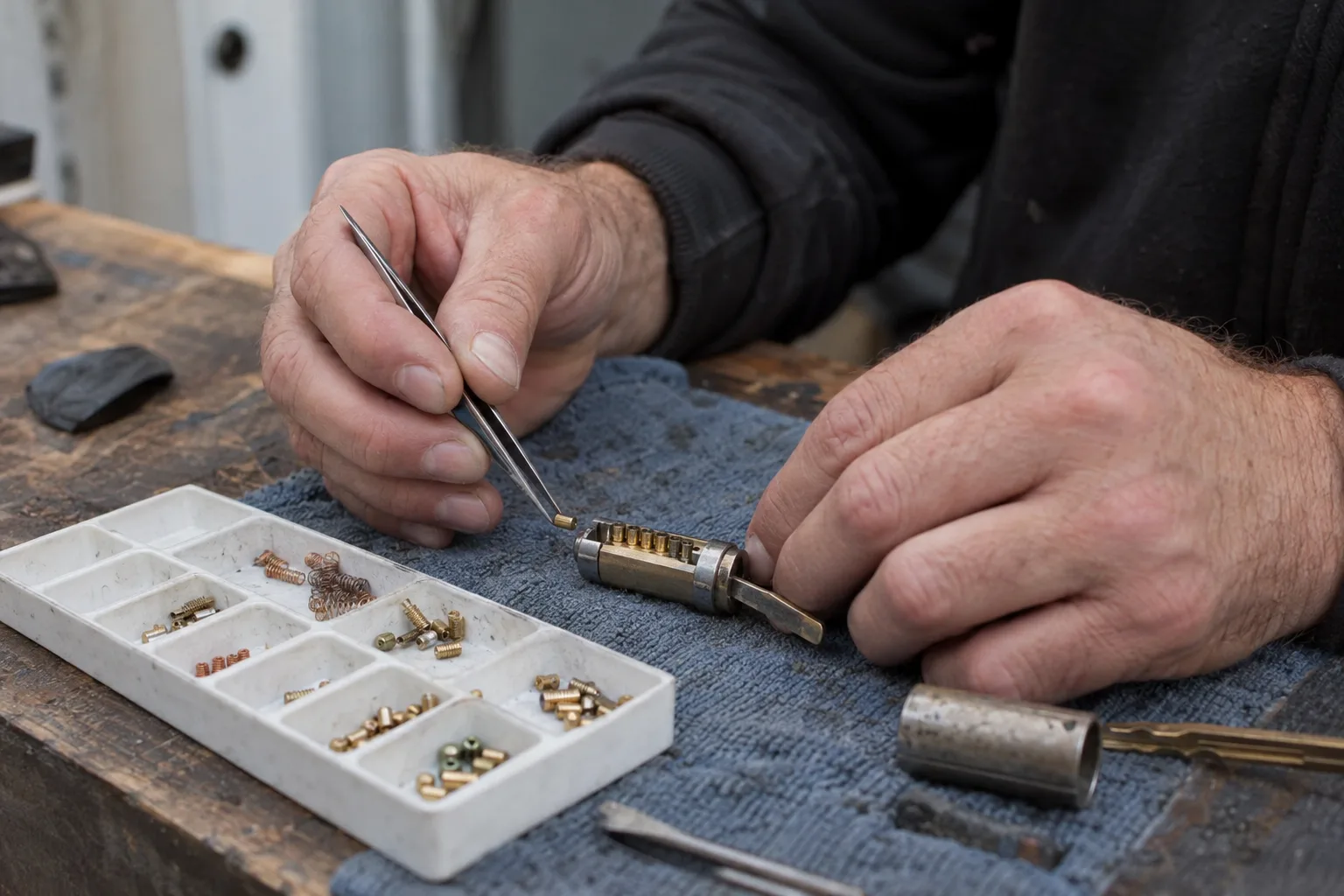
The master key opens every lock. A sub-master key opens one group of doors, like a floor or a wing. A change key opens one single door. Large campuses can add a grand master above everything. The work happens inside each pin tumbler cylinder, where small extra pins called master pins let two different keys turn the same lock. A key schedule records which key opens which door.
- Master keyOpens every lock in the system. Usually held by the owner.
- Sub-master keyOpens one group of doors, such as a floor, a wing or a maintenance area.
- Change keyOpens one single door and won't turn the lock next to it.
Walk the Hallway With Us: A Typical Building, Door by Door
Here is a common two-story office layout along Powers Ferry Rd. This isn't one specific past job. It shows how we think through a building.
Right now, each door has its own key and the owner's key ring keeps growing. The owner wants one key for every door. Everyone else should carry just one key.
Start at the front entrance. Every tenant needs this door, so it is set up to open with every key in the system. Locksmiths call this maison keying. Step into the lobby and there is a supply closet on the right. Only the master key opens it.
Down the first-floor hallway, suites 101 through 104 each get a change key for their own suite. Upstairs, suites 201 through 204 get the same setup. Each floor gets its own sub-master, so the cleaning crew carries two keys instead of eight.
Next to suite 204 is the mechanical room with the HVAC unit and electrical panel. It stays off both floor sub-masters. The maintenance lead gets a separate sub-master for it.
Every one of those decisions goes into the key schedule before a single pin is changed. When the plan is right on paper, the pinning is straightforward.
- Master key
- Owner opens every door, including the lobby supply closet
- Sub-master A and B
- First floor and second floor
- Sub-master C
- Maintenance, mechanical room only
- Change keys
- 101-104 and 201-204 one door each
Front entrance opens with every key in the system.
When one change key goes missing, only one cylinder needs new pins. A good key schedule saves unused change key patterns, so a lost key for suite 103 means repinning that one cylinder to a saved pattern and cutting new keys. The master and the first-floor sub-master still work, and no one else on the property needs a new key.
Marietta Buildings Often Start With Mixed Hardware
Office parks and apartment communities along Delk Rd and Powers Ferry Rd near I-75 often have more than one lock brand on the same property.
No third-party dispatch. Crews leave from Marietta and reach metro homes within the scheduled window.
Buildings updated in stages over the years can end up with several lock brands on one property. That detail matters more than most people expect.
A master key system needs every lock to share one keyway family. The keyway is the shape of the slot the key slides into, and mixed brands usually mean mixed keyways. So a master key system for an apartment complex or office in Marietta often starts with matching hardware. Cylinders that already share a keyway can usually be repinned. Locks with a different keyway get new cylinders that match.
Georgia summer humidity adds one more thing to check. Wood doors can swell, and a correctly pinned lock still feels stiff if the latch drags on the strike plate. That is why door fit is part of testing, not an afterthought.
What to Have Ready Before You Call
A few numbers about your building give the planning a head start.
Tell us your door count, your number of key holders and how many floors you have. If you know which lock brands are on your doors, that helps too, because shared keyways decide how much of your existing hardware can stay.
It also helps to think about how people move through the building. Who needs the front door, who needs a whole floor, and who needs only one room. Floors, wings or departments can all become tiers. Those routines become the draft key schedule we go over with you before any lock is touched.
Call 678-824-6578 or email info@peachlocksmithllc.com to start the floor plan.
We Group Every Door Before Cutting a Single Key
Every door gets a group and a tier before any key is cut.
- One keyway familyevery cylinder shares one keyway family, so the master key fits every lock
- Only the tiers you needeach master pin adds another way a cylinder can turn, so fewer tiers keep keys from opening doors they shouldn't; a grand master is added only when the property calls for one
- Spare patterns savedthe key schedule holds unused change key patterns for future tenants and lost keys
- Coded stamps, not door nameskeys get a code like "A-3" instead of "Suite 103," so a found key doesn't tell anyone where it goes
- Matched to how your people movesub-master groups follow your real routines, whether by floor, wing or department
- Key schedule reviewed with you firstthe draft schedule is gone over with you before any lock is touched
- Every key tested both wayseach key is tried in the doors it should open and in the doors it shouldn't
From Floor Plan to a Finished Key Ring
Every job runs in three stages: survey, set up, then test.
Diagnostics
We walk the property and look at each door, noting the lock brand, the keyway and the door type. Then we ask who uses which doors and how often. Cleaners, tenants, maintenance and owners all get mapped. That survey shows what it takes to rekey your building to a master key system, and the conversation becomes the draft key schedule we review with you.
Implementation
Cylinders that already share a keyway can usually be repinned without new hardware. Locks with a different keyway get new cylinders that match. We pin each pin tumbler cylinder to the key schedule, then cut the master, sub-master and change keys. Each key gets its code stamp.
Post-Service Testing
Every key goes into every lock it should open, then into doors it shouldn't open. Both checks matter. We also check how each door closes, because a latch dragging on the strike plate makes a correctly pinned lock feel stiff. We catch that before handing over the keys.
Serving 30067, Greater Marietta, and the Atlanta Metro
We plan master key systems across Marietta and the wider Atlanta metro.
From our office at 2108 Austell Rd SW, we serve 30067 and the whole city of Marietta. We also cover Smyrna, Kennesaw, Roswell, Alpharetta and Decatur, along with Vinings, Sandy Springs, Dunwoody, Acworth and Woodstock. Master keying is one part of our commercial locksmith service.
- Smyrna
- Marietta
Master keying questions
Can my building switch to a master key system without replacing every lock?
Often, yes. Cylinders that already share a keyway family can usually be repinned to the new key schedule. Locks with a different keyway need new cylinders that match, because the master key has to fit every lock in the system.
What happens if a tenant or employee loses their key?
Only that one cylinder needs new pins. The key schedule keeps unused change key patterns in reserve, so the lost key's lock is repinned to a saved pattern and new keys are cut. The master and sub-master keys keep working, and no one else needs a new key.
What is the difference between a master, sub-master and change key?
The master key opens every lock in the system. A sub-master opens one group of doors, such as a floor or a maintenance area. A change key opens one single door. Large campuses can add a grand master above everything.
Why are keys stamped with codes instead of door numbers?
A code like "A-3" means nothing to someone who finds a lost key. A stamp that says "Suite 103" tells them exactly which door it opens. The key schedule links each code to its door.
Does adding more tiers make a master key system better?
Not necessarily. Each master pin adds another way a cylinder can turn, so every extra tier slightly widens the set of keys that might operate a lock. We add only the tiers your building needs and a grand master only when the property calls for one.
Other services we provide
Ready to Map Out Your Building's Doors?
One call starts the floor plan for your master key system.
Your building gets one clear key tree. The owner carries one key for every door, and everyone else carries one key for their own doors. Call Peach Locksmith LLC at +1 678-824-6578 or email info@peachlocksmithllc.com. Tell us your door count, your number of key holders and how many floors you have.