Deadbolt Installation in Marietta, GA
A deadbolt is only as strong as the door, frame and strike it closes into. A solid lock set into a soft pine jamb with short screws can give way to one hard kick, while a mid-grade lock fitted properly into a reinforced frame holds far better. Peach Locksmith LLC installs deadbolts for homes and businesses in Marietta and nearby communities, on new doors, on doors that never had one, and as replacements for worn or cheap hardware.
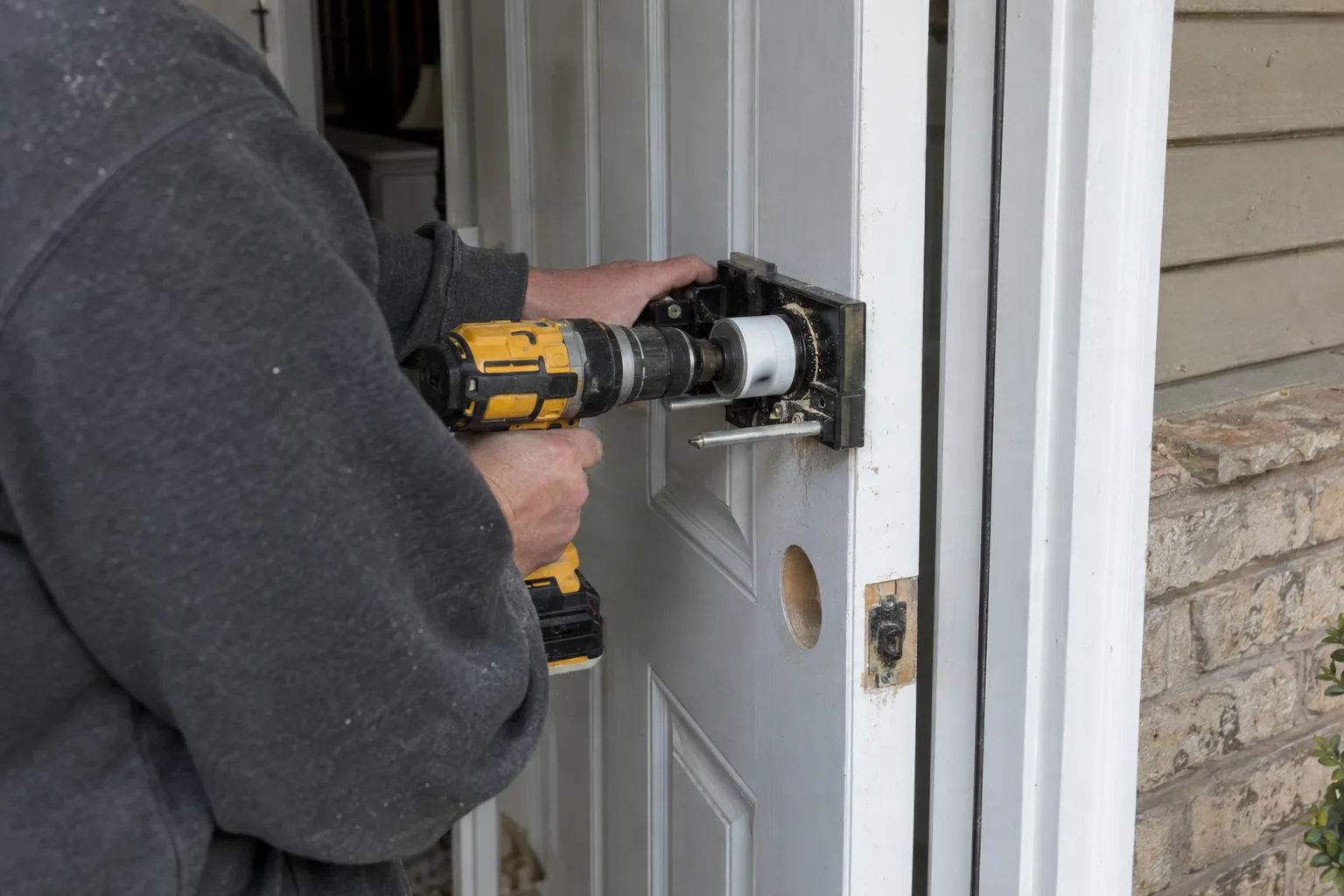
What makes a deadbolt actually hold
The lock body, the bolt throw, the strike plate and the screws holding it all to the frame work together. Weakness in any one of them is where a door fails.
Peach Locksmith LLC handles deadbolt installation as one of its core services, alongside lock installation, residential rekeying, high-security locks and smart lock installation. Deadbolts are commonly rated under the ANSI/BHMA grading system, which tests how much force, cycling and abuse a lock can take. Knowing the grade helps you match the lock to the door it protects.
- Grade 1The highest residential and light commercial rating. Built to resist the most force and the most open-close cycles.
- Grade 2A solid middle rating common on quality residential hardware. A reasonable choice for many front and back doors.
- Grade 3The basic rating. It meets minimum standards and is often the lock that comes boxed with a new door.
Georgia humidity and the doors it works on
Wood doors and frames around metro Atlanta swell and shrink with the seasons, and that movement affects how a deadbolt throws.
No third-party dispatch. Crews leave from Marietta and reach metro homes within the scheduled window.
A deadbolt that slides smoothly in January can drag or stop short in a humid August. When the bolt doesn't fully extend into the strike, it isn't locked in any meaningful sense, even if the key turned.
Many homes in Marietta, Smyrna and Kennesaw have wood jambs and doors that have shifted over the years. Sagging hinges, a frame that has moved slightly out of square, or paint built up in the strike opening all push the bolt off line. A careful installation checks the alignment of door and frame first and adjusts the strike so the bolt reaches full throw with the door in its normal position.
On older or damaged frames, the area around the strike is often split or patched from earlier lock changes. That wood is weak. Longer screws reaching into the framing behind the jamb, or a reinforced strike plate, give the bolt something solid to push against.
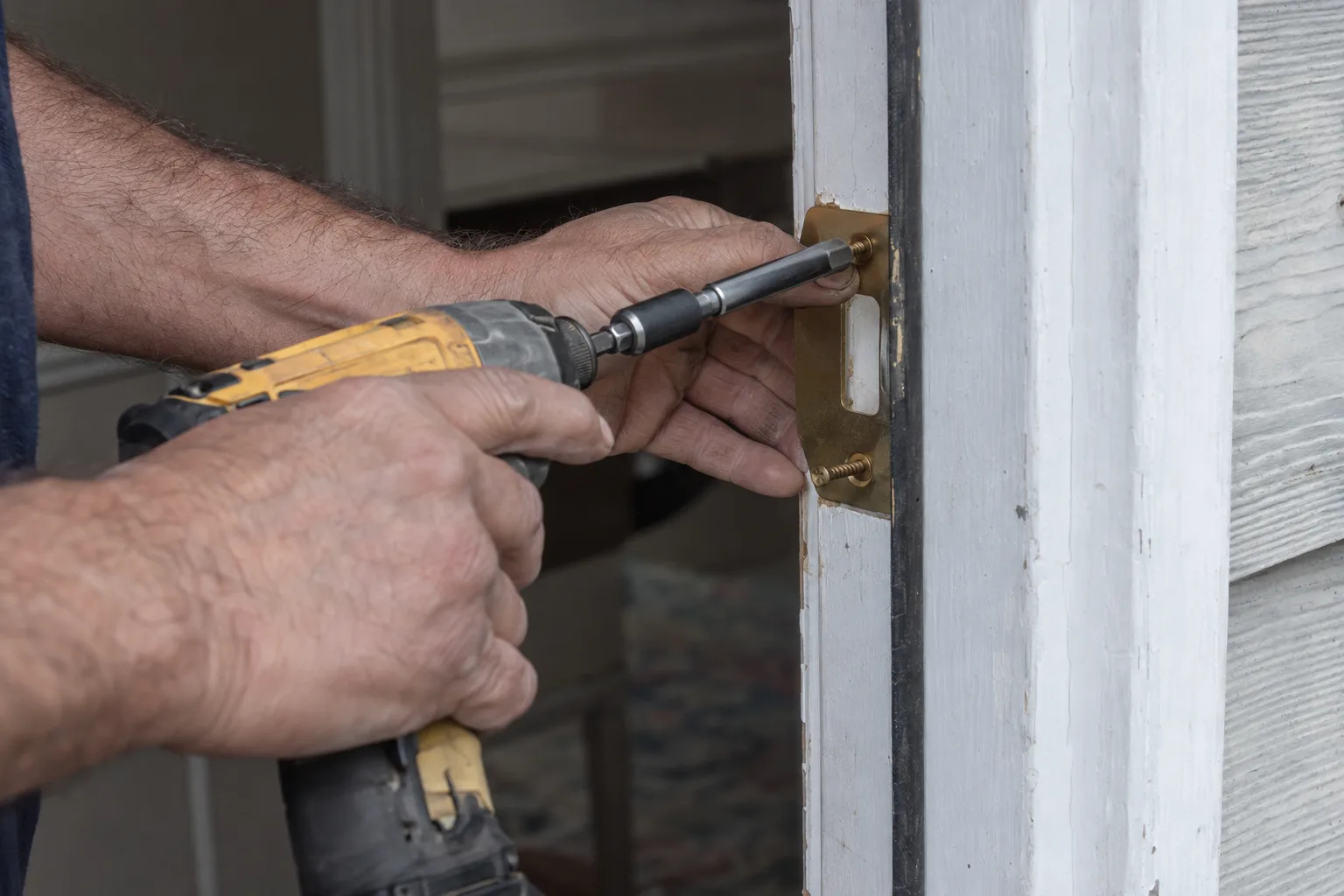
Planning a deadbolt installation
A short description of your door and what you want helps get the right hardware on the job.
When you call, it helps to know whether the door already has a deadbolt or only a knob lock, what the door is made of, and whether you want the new lock to use the same key as your other doors.
If you are thinking about a keypad or app-controlled lock instead of a standard keyed deadbolt, mention that too. Peach Locksmith LLC also installs smart locks and high-security locks, so the conversation can cover which option fits the door.
Call or email with your address and a description of the door.
What a sound deadbolt installation includes
These are the details that separate a lock that looks right from one that holds.
- Full bolt throwthe bolt extends completely into the strike with the door closed normally, not pushed or lifted
- Correct bore and backsetholes sized and placed to the lock maker's template so the cylinder and latch sit square
- Strike secured into framinglong screws through the strike reaching the stud behind the jamb, not just the trim
- Clean latch mortisethe faceplate sits flush in the door edge so nothing binds or rubs
- Smooth key and thumb-turn actionthe lock turns without forcing from both sides once installed
- Grade matched to the doorlock rating chosen for how the door is used and how exposed it is
- Keying consideredwhether the new deadbolt should match existing keys is decided before installation
How a deadbolt installation comes together
The work runs in a set order: check the door, fit the lock, then set the strike and test.
Assessment
The door and frame are checked first. That means door thickness, whether there is existing hardware and where it sits, how the door hangs on its hinges, and the condition of the jamb on the strike side. A door that has never had a deadbolt needs new holes bored, while a replacement may fit existing holes or need them adjusted for the new lock.
Fitting the lock
For a new installation, the cylinder hole is bored through the face of the door and the latch hole is drilled into the edge, then a shallow mortise is cut so the latch faceplate sits flush. The cylinder and thumb-turn are mounted through the door and tightened so the tailpiece engages the latch correctly. On metal or fiberglass doors, the tools and approach change to suit the material.
Strike and testing
The bolt position is marked on the frame and the strike pocket is drilled deep enough for the full throw. The strike plate is mortised in and fastened with screws long enough to reach the framing. The lock is then operated repeatedly with the door closed, by key from outside and thumb-turn from inside, to confirm the bolt extends fully without binding.
Areas we serve for deadbolt installation
Peach Locksmith LLC works from Marietta and serves nearby cities and surrounding communities.
Peach Locksmith LLC is based on Austell Road SW in Marietta and serves Smyrna, Kennesaw, Roswell, Alpharetta, Decatur and surrounding communities. If you are not sure whether your address is covered, call and ask.
- Smyrna
- Marietta
Deadbolt installation questions
Can a deadbolt be added to a door that only has a knob lock?
In most cases, yes. A standard deadbolt needs a hole bored through the face of the door and a smaller hole drilled into the edge, plus a strike pocket in the frame. The door has to be thick and solid enough at that spot to take the lock, so it is checked before any drilling.
What grade of deadbolt should I choose?
ANSI/BHMA Grade 1 is the toughest rating, Grade 2 is a solid middle option common on quality residential locks, and Grade 3 meets basic standards. Exterior doors that see heavy use or face the street are where a higher grade makes the most sense.
Does the strike plate really matter?
Yes. When a door is kicked, the force usually breaks the frame around the strike rather than the lock itself. Screws that reach past the jamb into the wall framing behind it make the frame much harder to split.
Can my new deadbolt use the same key as my other locks?
Locks of the same keyway can usually be keyed alike. Peach Locksmith LLC offers residential rekeying, so mention it when you call if you want one key for all your doors.
Should I get a single-cylinder or double-cylinder deadbolt?
A single-cylinder deadbolt has a key outside and a thumb-turn inside. A double-cylinder needs a key on both sides, which can slow you down getting out in a fire. Many people use single-cylinder locks for that reason. Check local codes before choosing a double-cylinder lock on a door used as an exit.
Other services we provide
Get a deadbolt installed the right way
Peach Locksmith LLC installs deadbolts for homes and businesses in Marietta and nearby communities.
Call (678) 824-6578 or email info@peachlocksmithllc.com to set up your deadbolt installation. Tell us about the door, whether it already has a deadbolt, and whether you want it keyed to match your other locks.